






by John Phillip R. Baguio
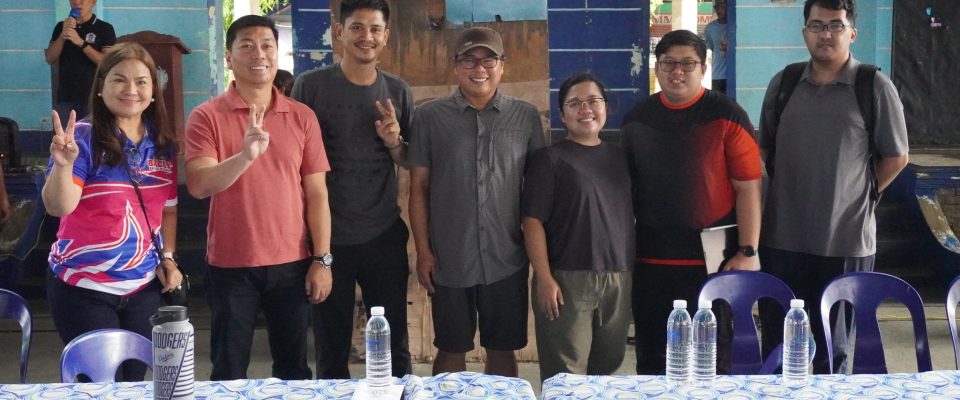
Dr. Allan Gil Fernando, Meyrick Tablizo, and Phillip Baguio, together with Dr. Paula Basilia of the UP School of Archaeology and FEU, conducted a three-day reconnaissance fieldwork in Anda, Pangasinan to identify potential fossil excavation sites and conduct preliminary analysis of elephantoid fossils currently held in a private collection. The team also paid a courtesy call to Mayor Joganie Rarang to formally present and discuss the planned research activities in the area.
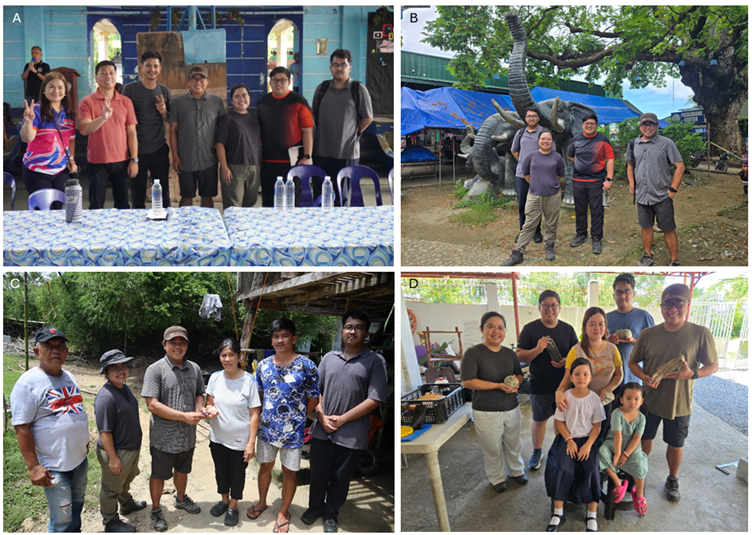
One of the excavation sites revisited in Brgy. Awile is located within land owned by the family of Lily Cacho and her son Lester Cacho, who generously donated a 788,000-year-old1 tektite sample to the team. Another household, the family of Cherry Calicdan, generously allowed the team to examine and measure the elephantoid fossils that were collected during a construction in their backyard. The fossils are believed to be Pleistocene in age and attest to the long-recognized presence of these extinct animals in Anda, Pangasinan, where similar fossils have been collected in the area since the 1950s2.
1 Jourdan, F., Nomade, S., Wingate, M.T.D., Eroglu, E., and Deino, A. (2019). Ultraprecise age and formation temperature of the Australasian tektites constrained by 40Ar/39Ar analyses. Meteoritics and Planetary Science 54(10): 2573-2591. https://doi.org/10.1111/maps.13305
2 Beyer, H.O. (1956). New finds of fossil mammals from the Pleistocene strata of the Philippines. National Research Council of the Philippines Bulletin No. 41:1-17. In: De Ocampo, R.S.P. (1983). Plio-Pleistocene Geology of Bolinao, Pangasinan and Vicinities. Geologic Papers No. 2. National Museum, Manila, Philippines.